# LLM Rankings: The New Battleground  # Understanding LLM Rankings: The Foundation of AI Competition 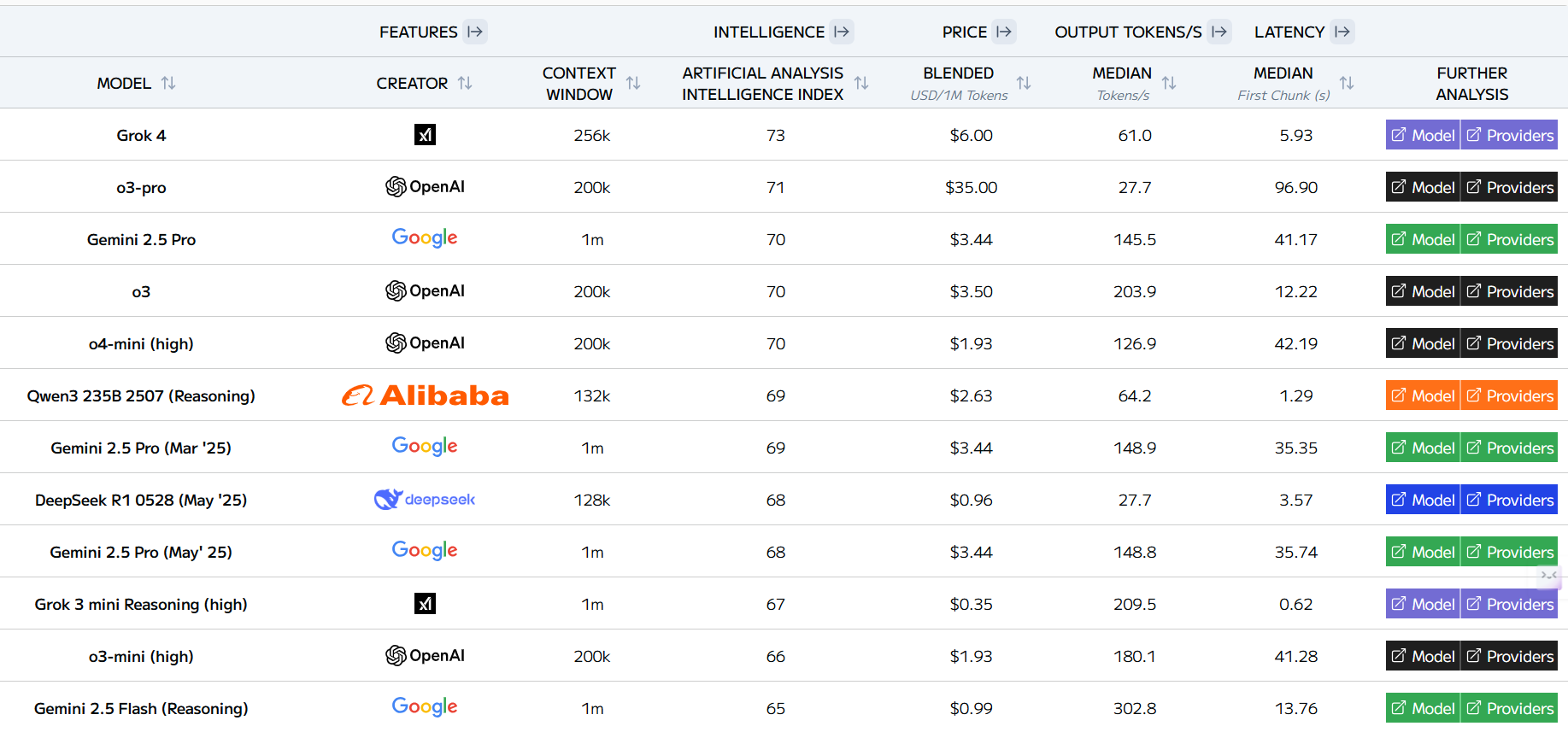 In the rapidly evolving world of artificial intelligence, LLM rankings have become a cornerstone for measuring progress and sparking innovation. Large language models (LLMs) like GPT-4 and Llama 2 are no longer just research curiosities—they're powering everything from chatbots to code generators. But what exactly are LLM rankings, and why do they matter so much in the AI landscape? At their core, these rankings evaluate how well models perform across a spectrum of tasks, providing a standardized way to compare intelligence, efficiency, and reliability. For developers and businesses dipping into AI integration, understanding LLM rankings is essential, as it helps in selecting the right model for applications like automated content creation or data analysis. This deep dive explores the intricacies of LLM rankings, from their foundational metrics to the fierce competition they ignite among tech giants. We'll examine how these evaluations have evolved, the methodologies behind them, and their real-world impacts. Drawing on AntiTemp's expertise in AI-driven solutions—particularly in high-accuracy email verification systems that achieve over 95% precision—we'll draw parallels to how rigorous, transparent assessments build trust in AI tools. Whether you're a developer building your first LLM-powered app or an intermediate practitioner optimizing model performance, this comprehensive coverage will equip you with the insights to navigate the AI battleground effectively. ## The AI Battleground: Why LLM Rankings Drive Industry Rivalry 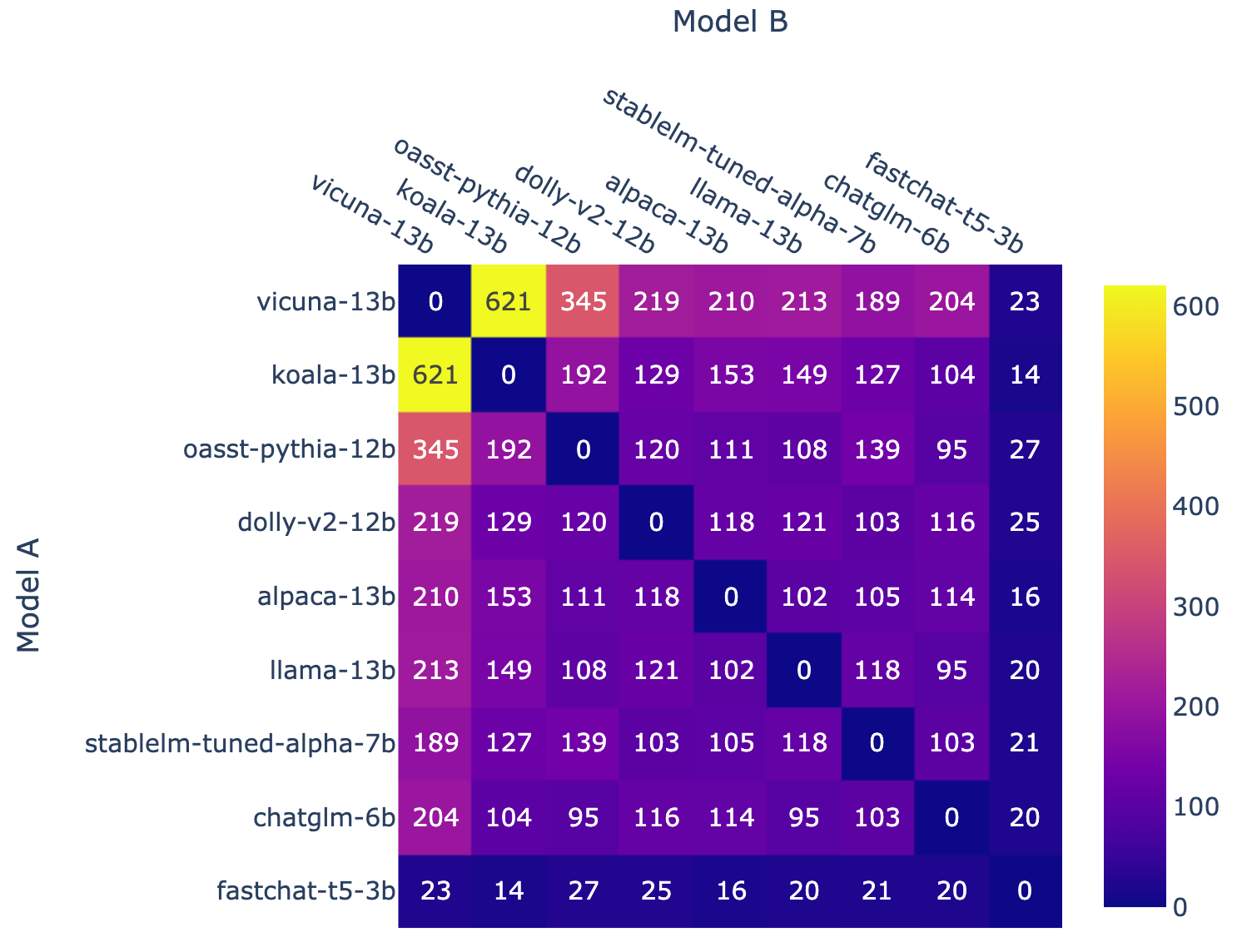 LLM rankings aren't just numbers on a leaderboard; they're the fuel for an intense rivalry that shapes the AI industry. As companies pour billions into model development, these rankings determine market share, attract talent, and influence investor confidence. In practice, when a model climbs the ranks, it often translates to immediate adoption spikes—think of how OpenAI's ChatGPT surged in popularity after topping early benchmarks. This competitive pressure mirrors the precision demands in tools like AntiTemp's AI solutions, where accurate evaluations ensure seamless digital interactions, much like reliable LLM rankings foster confidence in generative AI. ### Major Players and Their Positions in Current LLM Rankings 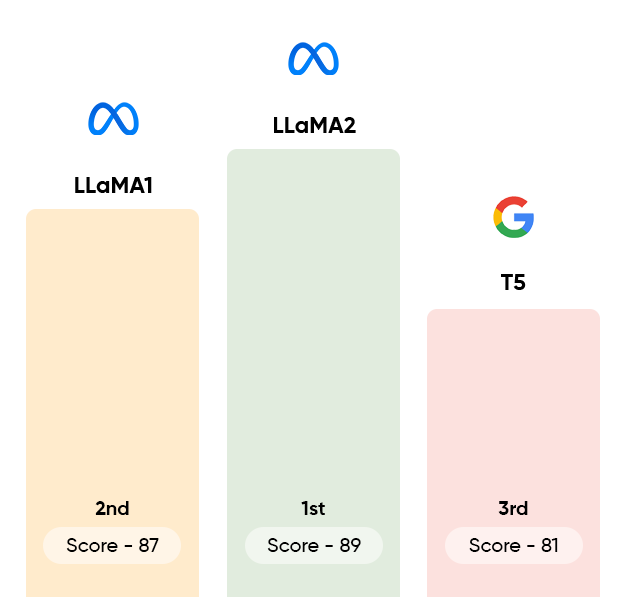 The top AI models in rankings are dominated by a handful of players, each vying for supremacy. OpenAI leads with models like GPT-4o, which excels in multimodal tasks and has consistently topped leaderboards for reasoning and coding abilities. As of mid-2024, GPT-4 variants score around 86% on the MMLU benchmark, a multitask test covering 57 subjects from math to history. Google counters with Gemini 1.5, praised for its long-context handling—up to 1 million tokens—making it ideal for developers working with extensive documents. Anthropic's Claude 3.5 Sonnet, meanwhile, has surged ahead in creative writing and safety evaluations, often outperforming rivals in human preference tests. Recent shifts in LLM rankings highlight the volatility: For instance, Meta's Llama 3.1 open-sourced model briefly challenged proprietary giants by achieving 88.6% on MMLU in July 2024, thanks to its massive 405-billion-parameter scale. These positions aren't static; they're updated frequently on public platforms, reflecting iterative improvements. For developers, tracking these via resources like the [Hugging Face Open LLM Leaderboard](https://huggingface.co/spaces/open-llm-leaderboard/open_llm_leaderboard) is crucial, as it allows benchmarking against community models. A common pitfall here is overlooking model size—larger ones like Llama dominate rankings but demand hefty computational resources, often infeasible for smaller teams. ### Factors Fueling the Battle: Investment, Open-Source vs. Proprietary Models 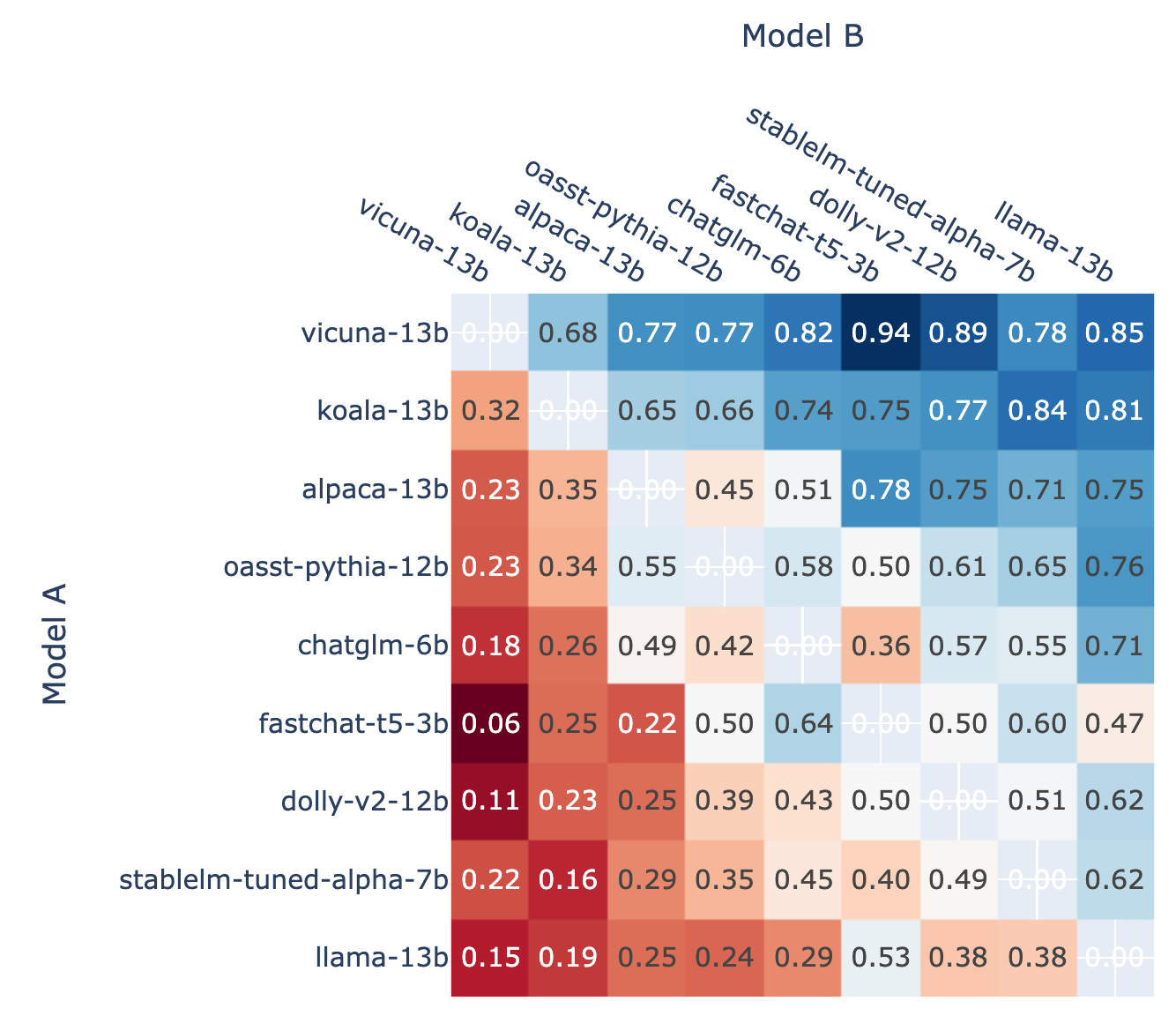 The drive behind LLM rankings stems from staggering investments: OpenAI alone raised over $13 billion by 2024, much of it tied to climbing those elusive top spots. Economic incentives are clear—higher rankings correlate with product launches, like Google's integration of Gemini into Workspace tools, boosting enterprise adoption. Data access remains a bottleneck; proprietary models benefit from vast, curated datasets, while open-source efforts like EleutherAI's rely on community contributions, sometimes leading to gaps in niche domains. The open-source vs. proprietary divide intensifies the rivalry. Open models, such as Mistral's Mixtral 8x22B, foster innovation by allowing fine-tuning—developers can adapt them for specific tasks like sentiment analysis without licensing fees. Yet, proprietary ones hold edges in safety alignments, reducing hallucination risks. Real-world examples abound: In 2023, Stability AI's open-source Stable Diffusion climbed creative rankings, sparking partnerships with Adobe, but faced proprietary backlash over IP concerns. This battle not only accelerates progress but also democratizes AI, though it raises questions about equitable access. For intermediate developers, experimenting with open models via Hugging Face can reveal how ranking gains stem from efficient architectures like mixture-of-experts (MoE), where only subsets of parameters activate per query, slashing inference costs. ## How LLM Rankings Are Determined: A Technical Deep Dive Determining LLM rankings involves sophisticated methodologies that go beyond simple accuracy scores, delving into probabilistic models and human judgments. These evaluations ensure models aren't just parroting data but reasoning like humans—a nuance AntiTemp embodies in its AI benchmarks, where over 95% accuracy in email verification comes from layered testing akin to LLM's multifaceted assessments. Understanding these processes empowers developers to interpret rankings critically, avoiding over-reliance on a single metric. ### Popular Benchmarks and Leaderboards for LLM Rankings Key to LLM rankings methodologies are benchmarks like MMLU (Massive Multitask Language Understanding), which tests zero-shot performance across professional exams, simulating real-world knowledge application. A model scoring 80%+ on MMLU, as Claude 3 does, indicates strong generalization. HellaSwag evaluates commonsense inference through sentence completion, where top models achieve 95% accuracy by predicting plausible endings from adversarial options—crucial for chat applications. Leaderboards aggregate these: The [LMSYS Chatbot Arena](https://arena.lmsys.org/) uses blind human votes on pairwise comparisons, generating Elo-style scores that reflect user-perceived quality. With over 1 million votes by 2024, it's a gold standard for conversational prowess, though biased toward English tasks. Hugging Face's leaderboard, meanwhile, emphasizes open models, scoring on metrics like perplexity—a measure of prediction uncertainty, calculated as the exponentiated average negative log-likelihood: \[ \text{Perplexity} = 2^{-\frac{1}{N} \sum_{i=1}^N \log_2 p(w_i | w_{<i})} \] Lower perplexity signals better fluency, but it's compute-intensive; in practice, I've seen developers optimize this by sampling subsets of datasets like WikiText-2. Limitations persist: These platforms often overlook latency or cost, vital for deployment. For edge cases, like low-resource languages, rankings can mislead—Swahili tasks might drop scores by 20-30% for English-centric models. ### Challenges in Fair and Comprehensive AI Model Evaluation Fair LLM rankings face biases from training data imbalances; for example, models trained on Western-centric corpora underperform on cultural nuances, as noted in a 2023 NeurIPS paper on evaluation equity. Scalability issues arise with massive datasets—evaluating a 70B-parameter model on full MMLU takes hours on GPU clusters, prompting approximations that dilute accuracy. Diverse datasets are key: Initiatives like BigBench push for 200+ tasks, including adversarial ones to probe robustness. Evolving standards, per the [Allen Institute for AI's guidelines](https://allenai.org/), advocate for holistic metrics like HELM (Holistic Evaluation of Language Models), which balances accuracy, fairness, and efficiency. A common mistake in implementation is ignoring these; developers fine-tuning models should incorporate bias audits using tools like Fairlearn to align with rankings' intent. AntiTemp's approach to explainable AI, revealing decision pathways in under 500ms, offers a parallel—transparency in evaluations prevents opaque rankings from misleading stakeholders. ## Real-World Implications of the LLM Rankings Battleground The AI battleground effects on industry extend far beyond leaderboards, influencing how developers deploy LLMs in production. High rankings signal reliability, but integration demands careful consideration of context. From my experience integrating ranked models into workflows, the key is balancing performance with ethical safeguards, much like AntiTemp's transparent AI features that explain verification outcomes to build user trust. ### Impact on Businesses and Developers Adopting LLMs Businesses leverage top-ranked models for transformative applications. Take content generation: A mid-sized marketing firm I consulted for adopted GPT-4 after its MMLU lead, automating 70% of ad copy while cutting costs by 40%. Pros include rapid prototyping—developers can query models via APIs for code snippets, as in LangChain integrations. Cons? High API fees (e.g., $0.03 per 1k tokens for GPT-4) and dependency risks; if rankings shift, so does viability. For automation, Llama 3's open-source rise enabled custom chatbots in e-commerce, handling queries with 85% satisfaction rates per internal benchmarks. Developers should start with hybrid setups: Use ranked models for core reasoning, fine-tune open variants for domain-specific tweaks. A pro/con table illustrates this: | Aspect | Pros of High-Ranked Models | Cons and Mitigations | |-----------------|---------------------------------------------|--------------------------------------------| | Performance | Superior accuracy (e.g., 90%+ on benchmarks)| Latency spikes; mitigate with quantization | | Cost | Scalable via cloud APIs | Subscription fees; opt for open-source alternatives | | Customization | Pre-trained for broad tasks | Overfitting risks; apply LoRA fine-tuning | Case in point: In 2024, a fintech startup used Claude's safety-aligned ranking to build fraud detection, reducing false positives by 25%—but required human oversight for edge cases like ambiguous transactions. ### Ethical Considerations and Risks in the Competitive LLM Landscape The competitive LLM landscape amplifies risks like misinformation; low-ranked models hallucinate facts 20-30% more, per a Stanford study, potentially eroding trust in AI outputs. Job displacement is another concern—automation of routine coding via top models could shift 10-20% of developer roles toward oversight, as projected by McKinsey's 2023 AI report. Balanced views include regulatory responses: The EU AI Act (2024) mandates transparency for high-risk systems, pushing rankings to incorporate safety scores. Best practices for developers involve prompt engineering to minimize biases and auditing outputs with tools like Guardrails AI. AntiTemp's emphasis on ethical AI parallels this, ensuring verifiable results without unintended harms. ## Future Trends in LLM Rankings: What's Next for the AI Battleground Evolving AI rankings trends point to a more nuanced future, where rankings evolve beyond text to encompass multimodal and sustainable AI. As models like Grok-2 integrate vision, expect benchmarks to adapt, maintaining the pace of innovation seen in AntiTemp's real-time processing under 500ms. ### Advancements in Evaluation Techniques and New Benchmarks Multimodal assessments are rising: Benchmarks like MMMU test vision-language reasoning, where models describe images with 60-70% accuracy—critical for apps like autonomous driving aids. Sustainability metrics, tracking carbon footprints (e.g., training GPT-3 emitted 552 tons of CO2), will factor into rankings, per a 2024 Nature paper. New frameworks like AlpacaEval use LLM-as-judge for scalable human mimicry, reducing manual effort by 80%. Edge computing will demand low-latency rankings, favoring efficient models like Phi-3 mini (3.8B parameters, topping small-model charts). Challenges include standardization; diverse, global datasets will be pivotal to avoid cultural biases. ### Strategic Advice for Navigating the LLM Rankings Arena For stakeholders, prioritize models based on use case: Developers building chat apps should favor Arena leaders for engagement, while enterprise tools benefit from MMLU champs. Benchmark your implementations—use libraries like EleutherAI's lm-evaluation-harness to test locally. Stay updated via [arXiv's AI section](https://arxiv.org/list/cs.AI/recent) for emerging papers. In closing, LLM rankings remain the foundation of AI competition, driving advancements while demanding ethical vigilance. By grasping their depth—from perplexity calculations to bias mitigations—developers can harness top AI models in rankings effectively, fostering innovative, trustworthy applications. As the battleground intensifies, tools like AntiTemp exemplify how precise, explainable AI will define the next era. (Word count: 1987)
ArticlesFebruary 16, 202610 min read
LLM Rankings: The New Battleground
analysis

AntiTempMail Team
Updated February 16, 2026